Showing posts with label Print groups and institutions. Show all posts

Wednesday, May 22, 2013

St. Louis Mercantile Library


Earlier this month I attended for the first time the St. Louis Fine Print, Rare Book & Paper Arts Fair. We have exhibited there for all 8 years of its existence, but it was always my partner, Don Cresswell, who attended. This year it made more sense for me to go, which I was pleased about as I had never really spent any time in St. Louis.


It was even more of a pleasant visit than I anticipated, though, for I was totally blown away by the venerable St. Louis Mercantile Library. This is one of the many private libraries (such as the Library Company of Philadelphia and the Cincinnati Mercantile Library) founded in order to provide a library to the community in the era before public libraries were established.


The St. Louis Mercantile Library was founded in 1846 and it is the oldest library west of the Mississippi. It was originally established to be a subscription library "where young men could pass their evenings agreeably and profitably, and thus be protected from the temptations to folly that ever beset unguarded youth in large towns."


The Mercantile Library has moved several times-—it is now housed at the University of Missouri-St. Louis—-and its purpose has changed over the years as well. Today it’s purpose is to serve as a community cultural asset, as a research library, and a repository of its impressive collection which its makes available to local and national users.


The collections concentrate on Western Expansion and the history, development, and growth of the St. Louis region and of the American rail and river transportation experiences, and they encompass a wide variety of objects including rare books, manuscripts, paintings, sculptures, newspapers, drawings, and of course, maps and prints.


To have such a great research resource is terrific, but a visit to the library itself is a real experience. The library is on the lower floors of the university library and the rooms are simply packed with not only shelves and shelves of books, but sculpture, models, paintings, maps, and prints hung in, it seems, every nook and cranny.


My visit for the fair was my first opportunity to visit and I didn’t have nearly enough time, but I wandered about looking at familiar and unfamiliar items with a huge grin on my face. Anyone interested in the Western Expansion would be well served to use this resource, but anyone visiting St. Louis should make it a point to stop by and experience what is, in effect, a twenty-first century version of the enlightenment's cabinets of curiosity.


Thursday, March 8, 2012

With a French Accent

Next week a really interesting print exhibition will open at the Davis Museum at Wellesley College in Massachusetts. Entitled With A French Accent. French and American Lithography Before 1860, it will run from March 14th through June 3rd. On display in the Morelle Lasky Levine '56 Works on Paper Gallery, the exhibition is free and open to the public. 


The exhibition is a joint project between the Davis Museum and the American Antiquarian Society. I have written many times in this blog about the AAS, one of the greatest and oldest American institutions with major collections of prints. The Davis Museum brings its own impressive credentials to this partnership. It is one of the oldest academic fine arts museums in the country, founded in 1889. It has an excellent permanent collection of paintings, sculptures, decorative objects and works on paper, and regularly holds fine exhibitions on many topics, including this new one on prints.


With a French Accent features about fifty French and American prints from the collections of the AAS, exploring the French roots of American lithography. The debt of American lithographs to the British is obvious and seminal, but French prints have had an equally important impact. This is a topic I have been interested in for quite some time (especially as related to the slightly “erotic” Currier & Ives prints based on French sources), so I am greatly looking forward to visiting this exhibition.

It is curated by Georgia Brady Barnhill ’66, Director of the Center for Historic American Visual Culture, and Lauren B. Hewes, Andrew W. Mellon Curator of Graphic Arts, both of the American Antiquarian Society. As they state, the exhibition, and an accompanying publication, “uncover several themes: the importance of French technology, the circulation and reproduction of French imagery, the stylistic contributions of French lithographic artists, and the reproduction of American genre paintings by French publishers for distribution in Europe and the United States." Note that the latter point shows that the influence, at least to some extent, flowed both ways across the Atlantic.

The exhibit opens next week, and I believe the book will be out at about the same time, but of equal interest is the related March 31st symposium, "French and American Lithography: History and Practice," also a free, public event. This will be co-hosted by the Davis Museum and the Center for Historic American Culture at the AAS. The symposium will “explore transnational interconnection, particularly the impact on American lithography of artistic exchange between France and the United States through the 19th and 20th centuries and into contemporary practice."

The symposium will be terrific, but even if you cannot make that, anyone interested in American historical prints should make a point to visit the exhibition at Wesseley.

Thursday, November 10, 2011

Library Company of Philadelphia Print Department

The last few months have been very busy, with a number of antique shows and other travel (I am off on Sunday for the Theta Show in Houston), so my blog postings have fallen off. I just got an email that announced a new on-line exhibit which I thought I should take the time to pass on...

One of my first blogs was about the wonderful Library Company of Philadelphia. I love it here in Denver, but I do miss some things from the East Coast. Its wonderful institutions being one of the main things I miss and the Library Company is at the head of the list of these institutions.

The Library Company always had prints, but it wasn't until 1971 that they appointed Stephanie Munsing as the first Curator of Prints and Photographs. The new on-line exhibition celebrates the 40 years of this department. It demonstrates better than any remarks I can make what a great department this is. Take a look!

Friday, March 11, 2011

Promoting Knowledge


I love prints of most types, but I have a particular fondness for prints that are fun but not too expensive. Such prints provide a way for people to have original art on their walls, items that are real antiques with historic interest, without spending the a huge amount to get them. I have just put together a window for the Denver shop with one group of such prints, those issued by the “Society for Promoting Christian Knowledge.”

Quite a mouthful isn’t it? I will discuss this society, and another similar group below, but first I want to explain a bit about these cool prints. These are from series called “Plates Illustrative of Natural History.” They are small folio (about 10 x 12) wood engravings with original hand color. They were issued by the Society for Promoting Christian Knowledge between 1845 and 1847 and they illustrate fauna from around the world. These prints were sold individually, either “plain” or “coloured,” and also in bound volumes.

Each print shows a bird, animal, reptile or fish portrayed in an unthreatening, even anthropomorphic manner. The images are fairly accurate, though somewhat crude and certainly humanized to some extent, and the fauna are generally placed into a natural setting. Each print has text below the image about the animal depicted, text that has a mildly religious bent.

This is not surprising for a society designed to promote Christian knowledge. The society was founded in 1698 as an arm of the Church of England. It produced theological books as well as popular works on science, travel, biography, fiction and natural science. All their works were aimed at the literate middle and working class. It is clear that these prints were likewise aimed at the children of this audience, to help spread general knowledge (with a Christian bent). I think they are fun in appearance and their history makes them particularly interesting.

These prints represent an interesting aspect of the British upper class, viz., their concern to spread knowledge to those less advantaged. The British upper class certainly believed that there was a natural difference between themselves and those of the working and middle classes, but the nineteenth century was a period both when some of the lower classes were able to raise themselves up, but also when the wealthy businessmen of the Industrial Revolution needed a relatively educated working class to help run their businesses and the country. Thus the elite had moral and business reasons to help promote knowledge to the middle and working classes.

Another group of similar intent was the Society for the Diffusion of Useful Knowledge (another mouthful), often referred to as the SDUK. This wonderful English enterprise, which had close ties to University College, London, was, similarly to the society just discussed, devoted to the spreading of up-to-date information and the enhancing of understanding for the working and middle classes.

Many of its publications were sold in only small numbers, though its Penny Magazine was quite popular, with a circulation of about 200,000 at its peak. The middle class did respond to some extent to its scientific publications, but the working class remained mostly uninterested. The society started in 1829, but went bankrupt in 1837, though some of its publications were picked up and continued to be published by others.

Interestingly, a similar organization, the Boston Society for the Diffusion of Useful Knowledge, modeled on the SDUK, was established in 1829 “to promote and direct popular education by lectures and other means. Besides its lectures, the Boston SDUK published a series of scholarly works as part of the American Library of Useful Knowledge, but the society was no longer active by mid-century.

Perhaps the most famous of the publications of the SDUK were its maps, which were issued from 1829 until 1844, separately and in a two volume atlas. These maps were very precise, based on the “latest” information and regularly updated.

Included in the series were 51 city maps, providing some of the best images of the cities of the work in the early 19th century. The maps/atlases were among the most successful of the SDUK publications, being issued in as many as 13,500 copies at the peak. The SDUK maps continued to appear as late as 1885, but by other publishers and in the later versions printed by lithographic transfers from the original steel plates.

Friday, February 4, 2011

Map Fair & Map Museum

While most of the US is suffering under cold & snowy weather, things look pretty nice down in Miami. This weekend there is a great reason to visit besides the great weather, the 2011 Miami Map Fair. Run by and held in the Historical Museum of South Florida, this is the preeminent map event of the year. 50 exhibitors are showing their wares on Saturday and Sunday, including many of the top map dealers in the world.

For the last four years I have been representing The Philadelphia Print Shop at the fair, but this year my partner, Donald H. Cresswell, will be attending instead. I envy him, for not only is the largest collection of available antique maps on display, but many of our friends in the business are either exhibiting or visiting. If you like antique maps, this is definitely the place to be (and don't forget your suntan lotion!).

One of the people who offen attends the map fair will be David J. Morgan, who just over a year ago opened a new non-profit museum, the CARTE Museum. Located at 2347 Christian Street in Baton Rouge, this museum was developed to make available to the public Dave's amazing collection for both research and exhibition. "Carte" is, of course, the French word for map, but Dave uses it also as an acronym for Cartographic Acquisition, Research, Teaching and Exhibition museum.

Dave's collection has been built over the past 40 years and its focus is on the Gulf Coast, though it is also strong in maps showing the political development of the United States. The collection includes complete atlases, books with cartographic content, and maps from atlases and separately issued. So far two exhibitions have been mounted, one of the discovery of the Mississippi River from 1513 to 1764, and the other on West Florida. Next week, the museum is opening a new exhibition "Mapping the Mississippi River and Its Tributaries," which covers the period from about 1750 to 1820. Dave is also planning a "jam-up Louisiana Statehood bicentennial exhibit" with an opening reception on April 30, 2012.

The museum is open to the public on Wednesdays from 9 to 5 or by appointment. Inquiries can be addressed to info@cartemuseum.org.

Wednesday, December 22, 2010

Denver Public Library

Last week I attended a breakfast meeting at the Denver Public Library about their new Creating Communities project. This is a terrific program which is designed to make the historical resources of the library, as well as those from other affiliated institutions, accessible to the general public through the Creating Communities web site. As a die-hard believer in the use of historical material to promote knowledge and understanding of our past, and so also of our present, I was delighted to find out about this program.

First a word about the Denver Public Library. Until this summer, I lived for the last three decades in Philadelphia, which has one of the oldest and best public library systems in the country, so I was very pleased to find that the Denver library system is also absolutely first rate. The library was established in 1889, the city librarian calling it a “center of public happiness.” In 1910, a new Central Library building was constructed, and then over the next decade eight branch libraries were built, all with the generous help of Andrew Carnegie. As the library system matured, new branches were opened, old ones refurbished, and in 1995 an outstanding new Central Library was built, designed by Michael Graves.

I am a fan not only of libraries, but also of institutions which hold collections of prints & maps. It turns out that in Denver the public library is the institution in this area with the best collection of historic printed images, a collection held in the Western History and Genealogy department. Their collection of Western Americana is, without question, one of the best in the country.

Opened in 1935, the Western collection was initially intended to focus on books by Colorado authors, but soon the department broadened its focus to encompasses all phases of the development of the trans-Mississippi West. To quote the library web site, “[t]he collection continues to grow and presently includes 200,000 cataloged books, pamphlets, atlases, maps, and microfilm titles. In addition, it offers 600,000 photographs, 3,700 manuscript archives, and a remarkable collection of Western fine art and prints to researchers across the world.”

Among the collections in which the library is particularly strong are publications of Western railroads, reports and maps of Colorado mining companies, trade catalogs, records and printed memorabilia of Buffalo Bill's Wild West shows, frontier theater programs, land grant materials, Colorado territorial imprints, architectural drawings, and extensive clipping files of local newspapers. The maps and atlases, of which there are about 6,000, and the historical views are, of course, of particular interest to me. The Western Collection is a place I plan to spend much time researching.

As with any library, one of the main goals of the Denver Public Library is to reach out to the community, both to provide it with access to its resources, but also to stimulate curiosity and increase knowledge. That is what Creating Communities does. Other local institutions are also involved in the project, including the City of Denver, History Colorado, the Auraria Library, the University of Colorado at Denver, and the University of Denver Penrose Library. This program makes available on the web many of the resources about Denver and its history from these institutions. One of the main parts of the web site is a section with information on seven of Denver’s historic neighborhoods, and many of the Western Collection’s archival materials, in digital form, are also available through the site, including property maps of the city.

An interesting part of the program is “myDenver”, which is designed to allow the general public to upload photographs and stories of their own, and to be part of an ongoing conversation about their city. The further development of myDenver is one of the main goals of the Creating Communities program going forward.

I was rather spoiled by the extensive institutional riches of Philadelphia and I was a bit concerned in moving to “the West,” that I would be bereft of this important type of resource. I was, as I should have known, mistaken in this, for Denver not only has its own rich history (though not as long a one as Philadelphia) but also its own wealth of historical material which available to me and to anyone else with an interest in the history of this wonderful city.

Saturday, November 27, 2010

Miscellaneous

I am sitting in our new Denver branch, The Philadelphia Print Shop West, just a week after our "Grand Opening." We had a great party with lots of enthusiastic visitors, and my partner Don Cresswell was able to come to Denver to help with the opening and see how the new space worked out.


The shop space has turned out quite nicely, with everything easily viewed and lots of light. We haven't been here long enough that a lot of people are coming here specially to see us, but we have had good foot traffic and I am looking forward to the Christmas season. It is certainly interesting opening this branch, for it has been a long time since we were anything but a very established business. Starting up a new shop is both exciting and scary. However, so far I'm having fun!

Though I have been rather irregular of late in terms of keeping this blog up-to-date, it did get a nice mention in an interesting Interior Design blog written by Sharon Harlon. She put up a post on 40 Antique Shopping blogs. I have enjoyed looking at the other antiques blogs she listed and, of course, it is always nice to get a plug...

And then I was also surprised and pleased that this blog was selected as one of the Best 50 Antiques Blogs on the Guide to Art Schools web site. This site is designed to assist prospective art students and it is great that the authors of the site are interested in my blog and antiques in general. It is a common complaint among antique dealers that the "young" are not interested in antiques, but this shows that this is not true. This shows that antiques can appeal to all ages if presented in the right way.

One other blog I came across recently of interest is "Franky's Scripophily BlogSpot," which concerns antique share certificates. Something I never realized is how many of these certificates depict maps. The blogger, Franky Leeuwerck, has put up a number of interesting posts on the subject of maps on share certificates. Worth checking out...

One final subject I wanted to mention is my great pleasure in now being in proximity to the Rocky Mountain Map Society. The Print Shhop has been a member for years, but now I am able to get to know its many members and attend the lectures. Earlier this month there was a terrific lecture on Alexander von Humboldt by Dr. Imre Josef Demhardt. The membership of this society is very active and many members are extremely knowledgeable about maps, especially those of Colorado and the American West. I will write this up more extensively down the road, but I will mention that in the works is a joint project for July 2012 between the Rocky Mountain Map Society, the Denver Public Library, the University of Denver, and the Texas Map Society, which will include a map symposium followed by a reprise of the Map Fair of the West. Lots of exciting stuff going on out here in Denver...

Friday, June 11, 2010

AHPCS Pittsburgh Meeting

On May 20 to 22, the American Historical Collectors Society held their annual conference in Pittsburgh. The conference, run superbly by Marilyn Bruschi, was filled with good company, interesting talks, and visits to some of Pittsburgh excellent institutions.

On Thursday we visited the Senator John Heinz History Center. The history center is the largest history museum in Pennsylvania and even includes the Western Pennsylvania Sports Museum. We had a couple of interesting presentations by the Anne Madarasz, the Museum Division Director, and David Grinnell, the chief archivist. The library, archives and museum include a large number of rare views and books on Pittsburgh history and I spent many, many hours there researching Panorama of Pittsburgh. It was fun to get to revisit the History Center and for other members of the AHPCS to see what a great resource and fun museum it is.

At the end of the afternoon, we were the guests of Bruce Wolf at the famous Duquesne Club, founded in 1873, which has an impressive collection of paintings by local Pittsburgh artists, especially David Gilmour Blythe. The centerpiece in the visit was the viewing of the remarkable 1859 bird's eye view of Pittsburgh by James T. Palmatary. This is the only known example of this print and it was "discovered" and researched by Bruce, with help by AHPCS member John Reps.

Friday was a very busy day filled with exhibitions and lectures. We started at the Carnegie Museum of Art, where we heard scholarly lectures on natural history illustrations in 19th century museum journals, by Bernadette Callery, and on sheet music covers by Mariana Whitmer, from the Society for American Music at the University of Pittsburgh. While I know a reasonable amount about both subjects, I found the lectures filled with interesting facts and insights. Following, I presented a lecture about one aspect of views of Pittsburgh I noticed while writing Panorama of Pittsburgh, viz. that an awful lot of these prints were simply copied from previously issued prints. This happens everywhere, but seemed particularly common in Pittsburgh.

After lunch, we were treated to viewings of a number of wonderful exhibits at two of Pittsburgh's great institutions. We started at the Carnegie, where we viewed an interesting exhibit on "Sixteenth Century Tapestries and Related Prints," and an exhibit I particularly enjoyed on "Cariacature, Satires and Comedy of Manners," featuring prints by Hogarth, Daumier and Francisco Jose de Goya. Amanda Zehnder, who put together this thoughtful, fun and visually excellent exhibit, gave a personal tour, which was universally enjoyed. Following this we went to another Pittsburgh gem, the Hunt Botanical Library at Carnegie Mellon University, were we hear Lugene Bruno talk about botanical printmaking and were able to visit the library and its current exhibition. These exhibits are still up and I highly recommend them to anyone near Pittsburgh.

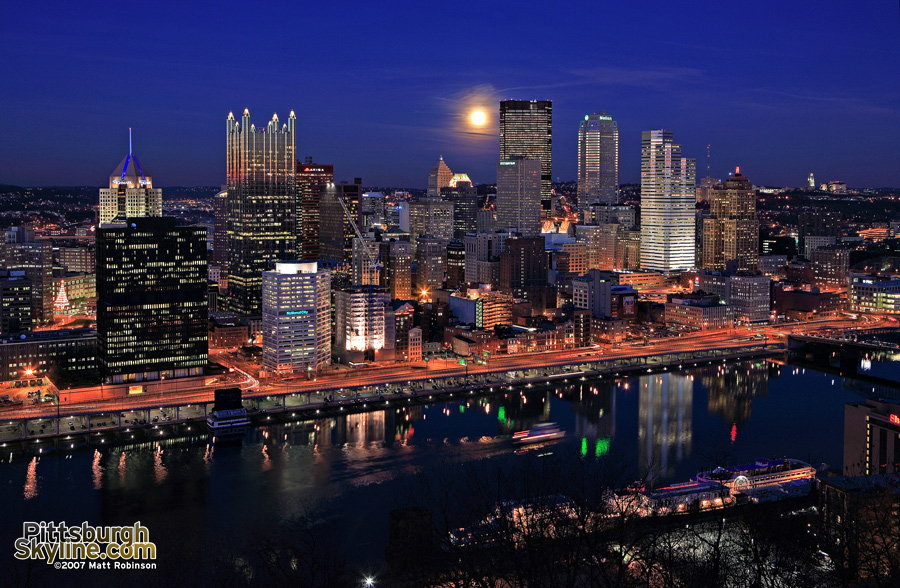
After this exhausting day, AHPCS members had the chance to explore some of Pittsburgh's superb restaurants and a number of us took the incline up to the top of Mt. Washington, where the view of Pittsburgh is unsurpassed. Unfortunately, I had to leave early the next morning before our visit to my favorite Pittsburgh institution, the Frick Art & Historical Center, the sponsoring institution for both the exhibit and book, Panorama of Pittsburgh. I was especially sorry to miss the presentation by George Nama, a friend who happens to be the most knowledgeable expert on Pittsburgh prints, as well as a terrific artist in his own right. I heard reports that his talk was wonderful, which would make it a fitting end to a wonderful annual conference!

Tuesday, March 30, 2010

American Historical Print Collectors Society Annual Meeting

I was away on vacation last week, so am just beginning to catch up enough to make some new posts.... Upon my return I got the latest issue of the American Historical Print Collectors Society newsletter. It gives information on the forthcoming annual conference, the subject of today's blog.

I have talked about the AHPCS in previous blogs, what a great group of people are members and how terrific are its publications, such as Imprint. One of the really nice things about the AHPCS is its annual meetings. This year's meeting will be held in one of my favorite cities, Pittsburgh, from May 20 to 22. I got to know Pittsburgh while writing Panorama of Pittsburgh and I found that not only did the city have superb repositories of prints, but it was an exciting urban center well worth visiting for its history, architecture, restaurants, parks, and much else.

The meeting organizer, Marilyn Bruschi, has put together a varied program, with a series of interesting talks on different print topics, including a presentation I will make based on material from my book. The meeting will also include visits to some of Pittsburgh's great institutions. The meeting will start at the Heinz History Center, where we will see many of the Center's huge collection of prints and photos. This is followed by a stop at the Duquesne Club, a private club which houses a terrific collection of 19th century paintings and the only known copy of James T. Palmatary's 1859 view of Pittsburgh, the largest and most detailed view of the city from the nineteenth century.

On Friday we'll visit the Carnegie Museum of Art and Natural History for more lectures and a private tour of their exhibit on caricature, led by its curator Amanda Zehnder. Then we'll move next door to the Carnegie Museum of Natural History, to see their collections, including their wonderful watercolors by John Abbot, and then off to the Hunt Botanical Library for a lecture on and viewing of botanical illustrations.

The fun continues on Saturday where we'll visit the Frick Art & History Center, where I will speak as will George Nama, probably the most knowledgeable man on Pittsburgh prints, not to mention a fabulous artist in his own right and a terrific guy! Time will be set aside for a visit to Clayton, the Frick home on the grounds.

Besides all these lectures and visits to these great places, there will two dinners with the group (and a "show & tell" on Friday night) and an optional visit to Falling Water on Sunday. You do not have to be a member of the AHPCS to attend, but as I have said elsewhere, this is a wonderful organization well worth joining! For more information and a registration form, you can visit the AHPCS web site. I will post a blog about the conference at the end, but wouldn't it be better if you were there yourself?

Tuesday, March 9, 2010

Princeton University Graphic Arts


As part my on-going series of blogs highlighting important print collections, today we'll look briefly at the graphic arts collection at Princeton University. To quote from their web site, the collection "includes artists' and private press books, as well as materials for the study of paper and papermaking, printing, calligraphy, printmaking, fine binding, typography, and book design. Of special interest are the Sinclair Hamilton Collection of American Illustrated Books; 18th- and 19th-century British artists and illustrators (particularly George and Robert Cruikshank, Thomas Rowlandson, and William Hogarth), and the Charles Rahn Fry Pochoir Collection."

The collection includes a large number of prints (not to mention drawings, paintings and photographs), and an extensive reference collection related to the history of the book and printing. Also a significant collection of printed ephemra such as trade cards, bookplates, etc. The collection is one of the best in the country and though geared for use of students and faculty at the University, Julie Mellby, the Graphic Arts Librarian, is very active in reaching out to scholars and the public in presenting exhibitions both on-line (check out the Cruikshank on-line exhibit) and in the Leonard L. Milberg Gallery on campus.

What prompted this blog, though, is Julie's terrific blog, Graphic Arts which I just discovered last month. I have enjoyed going through past blogs and am now a dedicated follower. Lots of great stuff here and I highly recommend that anyone interested in this blog should visit Julie's blog. Take a look, for instance, at the blog about Edward Orme's transparent prints. I hope that in the future I'll be able to do an interview with Julie, but in the meantime, check out the blog and the graphic arts collection web site.

Thursday, February 25, 2010

Boston Athenaeum


New England is the home of some of the best institutional print collections in the country. I have already written about the Connecticut Historical Society and the American Antiquarian Society, and today I will talk about another New England institution with a world-class antiquarian print collection, the Boston Athenaeum.

For almost three decades, Sally Pierce was the Athenaeum's Curator of Prints & Photographs. Sally is a superb print scholar, author (and wonderful person), who helped to turn the print collection at the Athenaeum into one of the best in the country. From 1991, Sally was assisted by Catharina Slautterback, who also co-authored a number of publications with Sally. When Sally recently retired, it was natural that Catharina would succeed her as Curator of Prints & Photographs. The Athenaeum was very lucky to be able to pass on the baton to such a capable, knowledgeable and experienced successor. Catharina has graciously agreed to be interviewed in this blog about the Athenaeum and its collection.

What is the history of the Athenaeum’s collection?

The Boston Athenaeum was founded in 1807 as a library, art repository, natural history museum, and laboratory. In the 1820s, the Athenaeum opened an art gallery, one of the first public venues for exhibiting art in New England. Although paintings and sculpture were the focus of both the Athenaeum’s art collection and its exhibitions, works of art on paper were routinely acquired and displayed. Most of the prints were acquired through donations and ran the gamut from European portraits, landscapes and city views to locally produced engravings and lithographs. Although several important early American artists, such as David Claypoole Johnston, Benjamin Nutting, and Seth Cheney, were nominally in charge of the “Engraving Room,” there was no clear collecting policy or curatorship in the modern sense of the word. The collection grew accordingly with the exquisite and the mundane coexisting in less than ideal housing environments. In the 1870s, the majority of the Athenaeum’s art collections were put on long term loan with the newly formed Museum of Fine Arts Boston and the Athenaeum focused on its mission as a library. Throughout the remainder of the nineteenth century and well into the twentieth century, works of art on paper were purchased primarily, although not exclusively, for documentary purposes, i.e. as art or geographical references.

The haphazard growth of the Athenaeum’s prints and photographs collection, so typical of the times, changed dramatically in the mid-twentieth century. In 1943 Charles E. Mason, Jr. and others founded the New England Historical Art Society to promote the study of the “history and customs of New England as portrayed in paintings, prints, engravings, sculpture, and other works of art.” The Society was one of a number of organizations and individuals that sought to challenge existing prejudices against American art and specifically American prints. In 1949 the Society was dissolved and its collection donated to the Boston Athenaeum, thus forming the nucleus of an independent prints and photographs department within the institution.

The Athenaeum’s collection was thus transformed from a large, but loose, assortment of prints and photographs to a tightly focused collection documenting New England culture, history, and printmaking. In its early years, the Department benefited from the guidance and generosity of Charles E. Mason, Jr., known affectionately as “Monk,” and one of the earliest and most enthusiastic collectors of American prints, particularly Boston lithography. Sally Pierce became Curator in 1981 and under her stewardship, the Prints & Photographs Department expanded to become one of the nation’s most significant collections of early American works of art on paper. I joined the Athenaeum in 1991 and assumed the curatorship of the Department following Ms. Pierce’s retirement in 2009.

What is the range of prints in the Athenaeum graphics collection?

Today, the Athenaeum’s Prints & Photographs Department is an active and vibrant member of the American print world. The collection is consulted by researchers around the world and individual items are exhibited and reproduced on a regular basis. The collection is comprised of works of art on paper documenting New England and American history from the eighteenth century to the present. Although classified as a historical documentation collection, many of the Department’s objects also have great artistic and aesthetic merits.

Its holdings include the graphic work of artists as diverse as Paul Revere, John Carwitham, Abel Bowen, Winslow Homer, Fitz Henry Lane, and William Morris Hunt. All manner of printmaking is documented within the collection, from aquatints and etching, to mezzotints, lithographs, and the four-screen processes of the early twentieth century. The subject matter of the collection is equally diverse with portraits, landscapes, genre scenes, urban and factory views, as well as significant holdings in Civil War-related imagery. In addition to prints, the Prints & Photographs Department actively collects photography, drawings, watercolors, posters and architectural drawings. A fuller description of the Department’s holdings can be found on the Athenaeum’s website.

What do you see as the greatest strength of the Athenaeum graphics collection?

The greatest strength of the Athenaeum’s Prints & Photographs Departments is undoubtedly its collection of nineteenth century Boston and New England lithographs. Boston was a center for the lithographic arts from the 1820s to the 1880s and home to such important firms as Pendleton’s, J. H. Buford’s, and Louis Prang. These firms produced a wide range of material: letterheads, sheet music covers, advertisements, political cartoons, playbills, and “art” chromolithographs. The Boston Athenaeum collects all of these materials and, in the process, documents not only the history of printmaking in America, and specifically in New England, but also the cultural, political, and social milieu of the nineteenth century.

What part of the graphics collection would you most like to strengthen?

I am always looking to strengthen the Athenaeum’s collection of eighteenth and early nineteenth century prints in order to supplement our understanding of American printmaking. And I am continually adding to the Athenaeum’s nineteenth century lithographic collection. I am particularly interested in the work of three Boston lithographers.

The short-lived firm of Tappan & Bradford (later L. H. Bradford & Company) produced some of the most beautiful examples of the lithographic arts with a fineness of draftsmanship and subtle tonal printing unparalleled at the time.

The chromolithographic work of Charles H. Crosby & Company is little known today; his output has been overshadowed by the more prolific and financially successful firm of Louis Prang. Crosby was an appalling bad businessman (he went in and out of bankruptcy several times) but he employed highly skilled artists and his firm produced some of the most ambitious and creative chromolithographic advertisements of the day. His work is fairly scarce and I would love to be able to document the full range of his work.

One of my favorite lithographic artists of the nineteenth century is the great portraitist, Leopold Grozelier. Although he died at the young age of thirty-five, he was incredibly prolific. The Athenaeum has over 80 portraits by Grozelier but I would like to continue to add to our holdings; it would be particularly interesting to acquire examples of prints that he executed in France before immigrating to the United States in 1851.

Is there any one print or type of print not in the collection that you would like to add?
Like most curators, my desiderata, or want, list is endless and I can think of several examples of prints and type of prints that I would like to add to the collection. For example, the Athenaeum has not traditionally collected color wood cut prints of the early twentieth century. There was a particularly vibrant community of wood cut artists in New England at this time and it would be wonderful to add some of their work to the Athenaeum’s collection.

In addition to adding new objects to the collection, curators must often “upgrade” their existing historical prints. This is not discussed very often but in fact many eighteenth and nineteenth century prints have had a long and hard life before they end up in a public repository. They have frequently been exposed to light, backed in wood, and stained by water or other liquids. Many have also suffered from the overzealous conservation treatment, often irreversible, that was typical of the mid-twentieth century. The Athenaeum is not unique in having some prints that are too fragile or worn to be handled or displayed. When an important print is in bad condition, I will seek to “upgrade” it by purchasing a better impression when and if it becomes available on the market.

What is the most important task as curator at the Athenaeum?

My first and foremost task as a curator is to make the Athenaeum’s collection of graphic art accessible to researchers. There are many steps involved in making a work of art accessible. Work must be acquired, accessioned, cataloged, properly housed, shared with researchers and classes, and, in an ideal world, published and exhibited. As the sole employee of the Athenaeum’s Prints & Photographs Department, I am responsible for all of these tasks, many of which are quite time consuming. These housekeeping chores may not be particularly glamorous, but an object that is un-cataloged or improperly housed is not accessible to anyone. As a curator, I am eager for the objects under my care to be used and enjoyed by the present generation as well as future generations. I like to think that for every print in my collection there is at least one researcher. To increase the likelihood that researchers will find their prints, catalog records for the Athenaeum’s graphic arts collection are available on our on-line catalog “Athena.”

What projects do you have underway or planned for the Athenaeum for the future?

I will be working on a series of exhibitions for the Athenaeum’s Norma Jean Calderwood Gallery. The exhibitions will take place over the course of the next decade and will feature highlights from the Prints & Photographs collections. One of the first exhibitions will be devoted to the development of the chromolithographic arts in Boston in the nineteenth century. There are also plans for exhibitions on the Department’s collection of architectural drawings and recent acquisitions of contemporary art.

What long-term goals do you have for the graphics collection at the Athenaeum?

In 2000, the Athenaeum received an endowment for the purchase of contemporary works of art on paper. Contemporary works are acquired for their documentation of New England in the 21st century and as a record of artistic activities in the region. In selecting contemporary works, I consider how they relate and speak to the historic prints in the collection. For example, I have been purchasing the work of a local artist who photographs the decaying structures of former New England factories. The Athenaeum also owns nineteenth century prints of many of these buildings and together these works record the evolving history of the area’s built environment. A contemporary print is contemporary for only a short period of time before becoming “historic.” By acquiring works by living artists today, I am able to build a historic collection for the future.

Who uses the graphics collection at the Athenaeum?

A wide variety of researchers make use of the Athenaeum’s graphics collections. Many of the researchers are academics with specialties in American studies and the visual arts. Architects and architectural historians also use the collection heavily as do textbook publishers and film documentarians.

What is the most common request you get related to the graphics collection at the Athenaeum?
There are two major categories of requests for images at the Athenaeum: 1) the built environment and 2) social history. New England has a long history of reusing and transforming its buildings and I assist many researchers in their attempts to visually document the past and present lives of various structures. Social historians have become increasingly adept at using the visual arts to understand the past. Although there are trends in academia, there has been a strong and continued interest in abolitionism, African-American history, and gender studies over the course of the past few decades.

What other print collections (institutional) with American prints do you think are particularly good?

There are so many excellent public repositories of American historical prints in the country. In my neighborhood alone, there are several superb collections: the Massachusetts Historical Society, the Boston Public Library, Historic New England, and the American Antiquarian Society. Many of these institutions have good on-line catalogs to their collections and they are all, without exception, overseen by wonderful, hard-working, and dedicated curators.