Showing posts with label Decorating with prints. Show all posts

Wednesday, August 29, 2012

Alexander Wilson's American Ornithology

In an earlier blog, I wrote about Alexander Wilson, often called the "father of American ornithology." He earned this sobriquet mainly for his illustrated work on American birds entitled American Ornithology, the first work specifically on the topic. In this blog, I'll look closer at this monumental publication.


When completed, American Ornithology consisted of nine volumes published in Philadelphia by Bradford and Inskeep between 1808 and 1814 It contained 76 hand colored engravings composed of 320 figures depicting 262 species, including 48 that had never before been recorded. According to one study, this was over three quarters of the bird species that resided in the United States as it was then constituted, a really impressive achievement for the first attempt at an American ornithology.


Typically of illustrated books of the period, this was sold by subscription, where subscribers would get the work in "parts" or "fascicles," which they would then pay for, allowing the author to use that money to produce the next part; this process continuing until the book was finished.


Alexander Wilson was able to sign up just over 450 subscribers, for a total of about $60,000 in orders. However, with all the delays, added costs, and other problems, Wilson never received any significant money from the project and upon his death his estate consisted mostly of just a few copies of his book.


The birds in the American Ornithology were not shown in any scientific order, but essentially in the order Wilson came across them, beginning with the more common and popular birds. Wilson prepared his drawings for each bird based on his field sketches, as well as on studies he made of specimens that he had collected or which were given to him or which he found in the Peale Museum.


Wilson’s drawings were engraved onto copper plates by a number of engravers, including John G. Warnicke, but mostly by his friend and compatriot Alexander Lawson. Several species were usually put onto a single plate, sometimes quite crammed in, mainly because this was cheaper in terms of the cost of the copper for the plates, but also so Wilson could show more birds within the scope of the proposed work.


One point to note is that funding was more available when George Ord produced the later editions-—as the work had by then achieved a considerable reputation—-so whereas the paper used in the first edition was barely bigger than the plates themselves, the later edition prints have bigger margins. The lack of money for the first edition, compared to the later editions, also means that the paper and ink for the first edition were not as good quality and so first edition prints tend to have condition issues not found in the later edition prints.


In the book, Wilson included a short description of each bird and often also a longer essay which was based on his extensive observations. Wilson’s text frequently was fairly philosophical, reflecting his poetic background. It really is the writing of an enthusiast rather than a clinical scientist.


In terms of the prints, Wilson examined each copper plate as it was finished and he also superintended the coloring of each print. In most cases Wilson provided the colorists with specimens to follow. There is a story that on April 18, 1807, when a new plate had come from the engraver and was ready to be color, Wilson could find no sample specimen of the Black-capped nuthatch. Thus, he set off to shoot one of these relatively common birds, but was frustrated in not being able to find one.


For the coloring, Wilson started by using local artists, such as Alexander Rider (who would later be involved with Bonaparte’s supplement), but he then switched to amateur or untrained artists who would follow his directions more closely. One of these was Charles Robert Leslie, who moved to England and went on to become a famous artist there.


Wilson was very concerned about the color accuracy of his prints and he felt that sometimes the use of a black ink would have negatively affected the appearance of the bird in the print, so he experimented with printing areas of some of the prints in different colored ink. For instance, the Library Company of Philadelphia has a nice example of the “Roseate Spoonbill” which has the body of the bird printed with a red ink. [Click here to see more information on this print and the color printing]


If one is used to looking at the dramatic and imposing double-elephant folio prints of John James Audubon, then Wilson's small folio images might seem tame and unimpressive. However, they are really charming images, teaming with a variety of birds, their unusual appearance fascinatingly explained by the history of the work from whence they came.


The price range on Wilson prints is very moderate, especially when compared to those of Audubon, and really given their unique aesthetic appeal and historical significance, they are, in my opinion, rather under appreciated and priced. I think there are few, if any, antique prints that are a better value and I would recommend these for anyone interested in bird prints.


Wednesday, October 5, 2011

Botanical prints by William Curtis


Early botanical prints are generally quite desirable both for collectors and those wishing to use them as decoration. They can be found uncolored, colored by hand, or printed in color, and in many different sizes, not to mention price ranges.

The prints found on the market generally range in date the sixteenth through the nineteenth century, with each period have its own typical style. Many love the boldness of the late nineteenth-century chromolithographs or the texture of the early nineteenth-century stipple prints, but my favorite botanicals are the engravings of the late eighteenth-century, especially those that are hand colored. Some of these can be fairly expensive, but the majority remain quite affordable. Some of the most reasonably priced, attractive and historically important of these prints are those done by William Curtis.

William Curtis (1746-1799) moved to London as a young man to become an apprentice to an apothecary, but his true love was botany and other natural history. He soon gave up his apprenticeship and took to a career as a natural scientist. His first work, which he produced at age 25, was Instructions for collecting and preserving insects; particularly moths and butterflies. In 1772, Curtis was appointed as Demonstrator of Botany to the Society of Apothecaries at the Chelsea Physic Garden and in 1779 Curtis established his own London Botanic Garden, where he cultivated about six thousand species of plants.

One of Curtis' particular interest were those plants growing within London. That interest led him, beginning in 1777, to work on a huge, multi-volume work, Flora Londinensis; or Plates and Descriptions of such Plants as Grow Wild in the Environs of London, intended to describe and illustrate every plant growing in London. This publication, which was completed in 1799 in six volumes, contained text and a folio engraving of each plant.

The Flora Londinensis was of high quality and very informative, and received excellent reviews. However, it was expensive for Curtis to produce, which meant it had a high price. Also, as it was a heavily scientific work focused on mostly humble plants growing along streets and in the fields of London, it had a somewhat limited market. Sales were not good, Curtis' costs were high, and after two volumes, he was debt-ridden.


In order to make some money, Curtis came up with the idea of a magazine to illustrate and describe the many attractive and exotic plants becoming available to gardeners in England. Thus was born, in 1787, his The Botanical Magazine; or Flower-Garden Displayed, a monthly publication with each issue containing a description and a hand-colored engraving of three plants.


As Curtis explained in the first issue, “The Botanical Magazine’ owes its commencement to the repeated solicitations of several ladies and gentlemen subscribers to the author’s botanic garden, who were frequently lamenting the want to work, which might enable them not to enquire a systematic knowledge of foreign plants growing in their gardens, but which might at the same time afford them the best information respecting their culture."


The Botanical Magazine, unlike the Flora Londinensis, was a huge commercial success. Its small size, bright flowers, and the fact that payments for each issue were quite modest, made it very popular. Curtis sold thousands of copies of each issue, the money helping him to continue work on his folio work: he is said to have remarked that each of his publications brought either “pudding or praise.”


Such was its success that Curtis’s Botanical Magazine, as it became known, became the longest running botanical magazine ever; despite a few hiatuses, it is still in publication by the Royal Botanic Gardens. The first thirty volumes used copper engravings, with later images being done by lithography and then later by photomechanical processes. Until the mid-twentieth century the prints were all hand colored.


All of the Botanical Magazine prints have a charm and attractiveness (not to mention accurate detail), but the earliest ones, those that are the engravings from the eighteenth century, are the most appealing. These prints are generally available at reasonable prices and make for great gifts and decoration, with their visual appeal and fascinating history. One of the interesting things about these prints is that they are numbered in sequence from the first print on and each is labeled with the month and year it was produced.

The larger prints from the Flora Londinensis generally do not have quite as much “petal power,” but they too are very attractive, historically interesting, and modestly priced. Curtis’ prints are a nice place to start for the beginning collector or anyone wanting some historical art for their walls.

Tuesday, May 11, 2010

Steel engravings: large, frameable prints

In the last blog we talked about steel-engraved illustrations. These small prints were issued in very large numbers, usually bound into a book or magazine. Today we’ll look at another group of steel-engraved print, ones at the other end of the size spectrum.

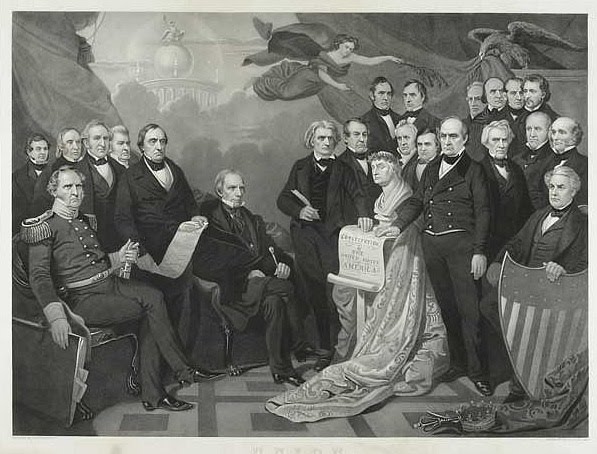
Beginning in the 1840s and lasting primarily into the 1870s, very large steel engravings were issued as separate prints by publishers, intended for people to frame and hang for display. These prints were very popular as decoration in that period and they would have hung in many middle and upper class homes, not to mention in well-heeled offices. Similarly to the small steel engravings, these prints were issued uncolored and would have been displayed as such.

We discussed the advantages of steel engraving in the previous blog and many of these advantages apply also to the large, frameable steel engravings. For instance, steel allowed for the printing of very large numbers of prints without wear. While the large steel engravings were not issued in anywhere near the number of impressions of the book illustrations, they were still run off in large numbers. Also, steel engraving allowed for very fine lines and many of these large prints have an impressive amount of close detail.

One benefit of steel engraving which did not apply to the book illustrations was that it made it practical for printmakers to create larger prints than one could do easily with copper. Many of the frameable steel engravings of the period are quite large, often ranging in the mid-20 inch high by upper-30 inch wide size.

The American Art Union and up-market publishers like Goupil & Co. did produce some lovely genre engraving in steel, but most of the large American, steel engravings had historical subjects. Images of George Washington, Benjamin Franklin, Abraham Lincoln and other famous American figures appeared time and again. Because of the size, these prints tended not to be just individual portraits, but were scenes at court, cabinet meetings, or other large gatherings of individuals. Political or historical allegories were also popular, and a number of battle scenes likewise appeared in this format.

When issued, these prints were considered not simply to be decorative, but also enlightening and ennobling. They were generally of high quality both in artistic rendering and skillful engraving; “fine” art, not simply “popular” art. They were “serious” prints, intended not just to decorate, but also to educate and inspire. It is interesting that at the time these prints were issued, these steel engravings were more expensive than the similarly-sized hand-colored lithographs, whereas today the opposite is true.

Their popularity seems to have been greatest in the antebellum period, and while they were issued later in the century, other types of large prints overtook them in popularity. At first, large hand-colored lithographs began to appear in greater numbers and then later in the century, large -sized chromolithographs offered just as much wall coverage, but for less cost and with color.

There was something of a revival of interest in large uncolored prints in the 1880s and 90s, with the etching revival, but by the 20th century such art fell well out of favor. It is because of this that many of these wonderful, mid-nineteenth century steel engravings were subsequently colored by printsellers, so that many are found "colorized" today. However, I am pleased to report this is beginning to change. A growing awareness of the historic importance and the visual appeal of these striking black & white images has led to a return of the appreciation of these prints both as fine antiques and as unique art for the home or office.

Tuesday, September 22, 2009

Zograscopes & Perspective Views


Zograscopes are optical devices used for viewing prints, probably invented around 1750. They were known in England as “optical diagonal machines” and in France as “optiques”. A zograscope consists of a mirror hinged with an optical lens attached to a bracket on top of a stand. The mirror can be angled so as to reflect the print through the lens, allowing the viewer to see an enlarged image of the print. Originally zograscopes may have been used simply for those who were short-sighted, who according to the conventions of the 18th century would not be seen in public wearing spectacles. A whole series of prints, called perspective views or vues d’optique, were developed to be viewed through zograscopes.


The lens of the zograscope enhanced for viewers the magnification and perception of three-dimensional depth of the scenes depicted. A mirror was used so that the perspective prints could be viewed when laid flat, and in these cases the images were viewed in reverse. It is therefore not unusual that the scenes shown were drawn in reverse, and there is also often a title printed in reverse along the top, allowing the viewers to quickly read the title. There was usually further text at the bottom of the prints which could be read by the operator of the optique for the benefit of his audience. This text often appeared in several languages, as the audience for these views was an international one.

The most characteristic feature of the perspective views is their emphasized linear perspective, done to further intensify the enhanced appearance of depth and illusionistic space in the prints when viewed through an optique. Another attribute of these prints is their bright, often crude hand coloring, applied boldly so to show the tints when viewed through the lens. The prints usually have a series of colors–blue, pink and yellow are common–crossing in bands from side to side, with bright highlights often including red.

The prints were exhibited by traveling showmen in the streets throughout Europe and also were collected by those in the professional and upper classes who had the optical machines at home. There was a great curiosity about the appearance of unvisited European cities and exotic locations in the further reaches of the globe, and these prints were one of the only ways the general public could get a look at the wider world. When displayed in the optique, the prints were able to transport the viewer into a far away place–an unknown city, or perhaps into the midst of a dramatic bit of contemporary history or to the distant past.

The height of popularity of the perspective views was in the late eighteenth century, when images of all parts of the world, as well as biblical and historical scenes, were issued in large numbers by publishers in England and on the continent. Zograscopes were produced throughout this period, but were being sold even as late as the second half of the nineteenth century, by which time they were probably more of a curiosity than a common item for every household of taste, as they were in the eighteenth century. Zograscopes have become quite uncommon and are often misidentified as “Georgian shaving mirrors,” but when found they still work wonderfully when used with original perspective views.
The perspective views are usually quite attractive and are terrific for both decorating and collecting. Their bright colors and intentionally striking designs, often with the visually interesting reversed writing, makes them wonderful decorative art that can be used in a period (i.e. eighteenth century) or modern setting. While some of the views, as discussed below, have fairly high value, many of the European scenes sell for very modest prices, making these some of our favorite prints to suggest for decorating on a limited budget.

For collectors, the subject matter makes them interesting. Most of the views are European, but there are views of all parts of the world. The images of Europe tend to be relatively accurate, as the audience would immediately recognize incorrect images. In contrast, foreign views--say of Asia or North America--are often simply made up, as the publishers assumed that the buyers probably would never visit the locations nor were that worried about accuracy. For instance, the view of Philadelphia is actually a scene of Greenwich, England, modified slightly and with the only thing about it relating to its alleged subject being the boldly printed title.
The North American views, of New York, Salem, Boston, and Philadelphia, tend to be quite desirable, though more as curiosities than views, and those of Asia or Africa are also quite collectible. The most desirable are the images of scenes from the American Revolution. While these are as inaccurate as the American views, they are contemporary images of the Revolution and, as discussed in a previous blog, have that immediate historical connection which gives them collector interest and value.

Tuesday, July 21, 2009

Prints: Art for a Down Economy

This week I am in France on vacation (yeah!), so I've asked Kelli Lucas for another of her interesting blogs. Here it is:

I've been doing some research lately on twentieth century print clubs and have noticed that, though some of these groups were born in the midst of the heady 1920s and survived past the prosperity of the 1950s, their heyday really took place during the spare decades of the 1930s and 1940s. During years when artists needed to sell things and consumers needed to buy things cheaply, prints became the darling of the art world. Looking at the clubs and societies that flourished in those decades is giving me a little insight into long-term popularity of prints and--perhaps--a bit of wisdom for art collectors weathering the current economy.

Since the invention of the printing press, one of the most attractive features of prints has been their inherent accessibility. Produced at a smaller scale than most paintings and in greater numbers, they are inherently easier to possess and display and more affordable than paintings or sculpture. The link, though, between those who make prints and those who would buy them is rarely self-evident; that is, the average, middle-income art collector is not always in direct contact with the average, eager-to-sell etcher or lithographer. Enter the print club.

Print clubs and societies have taken various forms over the last two centuries, but they have had at their core one goal: the introduction, in varying degrees, of consumerism to art (and art to consumerism). Chris wrote earlier about the American Art Union, which was really the first such organization in the United States. As the Etching Revival gained steam in the late nineteenth century, groups rose up to support a new generation of printmakers, artists whose primary medium was prints rather than paintings or sculpture. These decades really became a golden age for print clubs, with popularity that peaked during the 1930s. As disposable income plummeted during the Great Depression, artists needed a way to sell their work and collectors needed a way to buy it in such a way that would maximize benefit for both.

In New York City, Reeves Lewenthal opened a gallery called Associated American Artists, commissioning artists for $200 to produce editions of prints that would sell to the public for $5 per piece. To this day, Associated American Artists prints can be found in print shops and print collections across the country and represent work by such fine printmakers as John Steuart Curry, Frank Bishop, Grant Wood, and others. Other groups, like The Woodcut Society, adopted a subscription structure.

The Woodcut Society was established in 1932 by print enthusiast Alfred Fowler to promote the appreciation of woodcuts and help provide opportunities for American woodcut artists. The society issued 44 prints between 1932 and 1954, some by the best artists of the period. For an annual subscription fee, members were entitled to receive a print from editions of 200, mounted inside a letterpress printed folder with an artist's foreword or critic's essay. Ready to be framed, the prints could also safely be kept in their folder of issue, making the woodcuts they contained even more affordable (as they did not require elaborate, immediate display mounts).

The subject matter addressed by Woodcut Society artists was a wide mix, mainly presented in a representational style. Some artists dealt with Regionalist topics, including men at work in rural settings. Others addressed classical themes like the female nude and still life. Landscapes from New England to Arizona also appeared over the years, as did animals, domestic and wild.

Accessibility was the name of the print club game then, and, to a great extent, still is. The prints from such societies have become highly collectible, depending on the artist, but many are still affordably priced. Though we (of course) are biased toward antique prints, there are still clubs that exist in the same fashion as the Woodcut Society: annual membership dues get you access to some really fine prints. Locally, Philagrafika is doing fine work, but these organizations are thriving across the country. The lesson to learn from the Depression-era print clubs, in my opinion, is that collecting art is not an inaccessible luxury limited to flush economic times. Even when budgets are tight, it is possible to seek and find good art, and chances are that when you start looking, you'll find what you're looking for in a print.